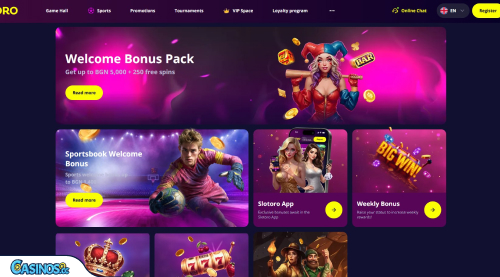
I’ve spent years advising players in Denmark across the highs and lows of their gambling habits, and one thing is clear: the tools and support services out there can create a real impact once you learn to interact with them. At Slotoro Casino, we consider the responsible gambling page as more than a list of links; it’s a foundation for a customized strategy. I’d want to walk you through the resources that often go overlooked, from deposit limits and self-exclusion to professional counselling and digital accountability apps. I’m not here to preach; I want to provide you with a actionable framework that guarantees every interaction with support services more effective. Grasping why each option is available and how it aligns with your daily life turns vague good intentions into concrete steps that truly shield your wellbeing. This article is your blueprint, crafted from my own experience assisting players like you handle Danish systems and Slotoro’s safer gambling features.
Understanding Deposit and Loss Limits
Deposit and loss limits are the first thing I suggest, but many players configure them once and never adjust them. A deposit limit caps how much you can transfer into your account over a given period; a loss limit halts gameplay when your net losses in that period reach a ceiling you set. The distinction is significant: with only a deposit limit, you can still reload quickly after a win that fades, chasing losses. I advise clients to view these limits as a dynamic budget rather than a static fence. Set them a little below what you think you can afford, so the choice is already made before emotions control mid-session. At Slotoro Casino, you’ll find these controls in your account settings. Tightening a limit applies immediately; increasing one initiates a cooling-off delay. I’ve seen that delay save people from impulsive decisions more times than I can count.
Tech Tools and Applications for Day-to-Day Accountability
Applications that restrict gambling sites
Beyond the self-exclusion systems and account limits, I’m a strong supporter for employing technology that monitors you across devices. Filtering tools such as Gamban or BetBlocker can be installed on your phone, tablet, and computer to block access to thousands of gambling sites worldwide. I’ve seen these apps function as an invaluable backstop for players who signed up with ROFUS but still discovered themselves tempted by unlicensed operators or offshore sites that slipped through the system. The installation is generally straightforward, and once active, the software runs in the background with no easy override. What I like is that these tools create deliberate friction between the impulse to gamble and the act itself, giving you those extra seconds to recollect why you installed the app. I suggest pairing a blocking app with a daily accountability practice, such as a mood tracker that records your urges, so you can detect patterns before they escalate.
Monitoring Progress and Adjusting Your Approach
Keeping a gambling diary
I encourage every player I work with to maintain a simple diary for at least a month, not necessarily forever. The diary needn’t be long; a few lines after each session recording the time spent, the amount deposited, the final balance, and a one-word emotion can expose patterns you’d otherwise miss. One client discovered through his diary that he only ever exceeded his limits on Thursday evenings after particularly stressful work meetings. With that insight, we created a specific alternative routine for Thursday nights, which broke the cycle. A gambling diary turns abstract feelings into actionable data. When you assess it weekly, you can recognize whether your limits are realistic, whether your self-exclusion period needs an extension, or whether your triggers are shifting. This ongoing feedback loop is what differentiates a temporary fix from a lasting change.
When to seek a different form of support
I tell the people I advise that the support landscape isn’t one-size-fits-all, and what functioned well six months ago may not match your current situation. If you notice that deposit limits and self-exclusion are still leaving you in distress, it might be time to consider intensive outpatient programs or even residential treatment, both of which are offered through the Danish public health system. Similarly, if you tested a blocking app but discovered ways around it, upgrading to a router-level restriction or combining multiple blocking tools can seal those gaps. The marker of healthy progress isn’t the absence of difficulty but your willingness to modify your strategy without shame. I regularly review care plans with my clients, and the ones who thrive are those who treat setbacks as information, not as moral failings. Your gambling support resources are only as effective as your readiness to adjust them, and that flexibility is something I want you to hold onto long after you finish reading this page.

The Strength of Self-Exclusion Programs
Comprehending Your Self-Exclusion Options
Self-exclusion is the most effective protective action you can take, and in Denmark it’s both straightforward and reachable. When a player tells me gambling feels less like entertainment and more like a urge, I guide them toward this option without reservation. Self-exclusion means you freely ban yourself from accessing gambling facilities for a specified period, from months to permanently. It’s a cooling-off interval that compels a full break, giving your brain the capacity it needs to recalibrate reward circuits. The psychological ease that comes from understanding you cannot bet, even if the desire hits, is a thing many of my patients portray as life-changing. What makes it so beneficial is that it eliminates the daily battle with willpower; the choice is already established and applied for you.
Registering with ROFUS in Denmark
Here in Denmark, the national self-exclusion program is named ROFUS, and I consider it an crucial instrument for any person who bets at licensed websites https://slotoroscasino.dk/responsible-gambling/. You can register through the Danish Gambling Authority’s site using your NemID, which ensures the method equally secure and fast. Once signed up, you are blocked from all licensed online betting platforms and betting companies, including Slotoro Casino, for the length you pick. I suggest you adhere to these stages for a easy enrollment:
- Visit the official ROFUS section on the Spillemyndigheden website and log in with your NemID.
- Pick between a temporary exclusion of 1, 3, or 6 months’ duration, or a permanent block that is unable to be undone.
- Confirm your decision and take note of the immediate effective date; you will obtain a digital acknowledgment for your documentation.
- Contemplate removing gambling applications from your mobile and canceling from marketing messages to strengthen the hiatus.
I’ve guided many players through this procedure, and the most common reaction is that the permanent option appears frightening at the outset, but those who opt for it often share with me later it was the most compassionate decision they ever undertook for themselves.
How to Use Slotoro Casino’s Safer Gambling Tools
Configuring Deposit Limits
A short overview to establishing your first deposit limit
Each time I show a new player Slotoro Casino’s responsible gambling dashboard, I begin with the deposit limit feature because it right away puts a financial guardrail in place. Sign into your account and head to the “Safer Gambling” section, which you’ll locate in the main menu. You’ll find options for daily, weekly, and monthly caps. I advise starting with a weekly limit rather than a daily one; it enables you shift your play between days while keeping within your total budget. Enter an amount that aligns with your entertainment budget, not your dream for a big win. The moment you confirm, the cap is in effect, and any decrease applies straight away. If you ever increase the limit, you’ll encounter a mandatory waiting period. I’ve witnessed that delay prevent a lot of rash moves after a bad beat.
Reality Checks and Session Reminders
Reality checks are pop-ups that display at intervals you set, displaying you how long you’ve been playing and your net result so far that session. I usually recommend the 30-minute option, because half an hour is sufficient to immerse yourself in a game but short enough to break you out of any trance. These nudges aren’t meant to spoil your fun; they’re there to reacquaint you with your rational thinking. When I helped players who found it hard to control their gambling, we often discovered the main problem was simply losing sight of time. Slotoro Casino also lets you combine reality checks with a hard session limit, so if you dismiss a reminder and keep playing, the system will eventually log you out. That combined approach turns a simple pop-up into a real safety net.
Activating a Time-Out
A time-out is a milder alternative to full self-exclusion that I often suggest for players who require a break but aren’t ready for a long-term ban. At Slotoro, you can set a time-out for 24 hours, 7 days, or up to 30 days. While it’s in effect, your account stays open but you can’t deposit or play. I’ve witnessed this work well for people who simply need to step back after an unusually intense weekend. The good thing about a time-out is it lacks the weight of a formal exclusion, so it appears less daunting to use. Think of it as a short holiday from gambling, a chance to reset without any permanent record.
How Friends and Family Can Improve Your Support Network
Initiating the conversation
Talking about gambling struggles with loved ones is, in my experience, the single most underused resource. The fear of disappointment or anger often keeps players silent, but almost every person I’ve guided through this conversation reports that it lifted a heavy weight. I suggest you choose a calm, private moment and be direct about what you’re experiencing, without downplaying it. You might say something as simple as, “I’ve realised my gambling has gotten out of hand, and I’m taking steps to get it under control. I’d value your support.” https://en.wikipedia.org/wiki/Paradiso_sul_mare This approach shifts the dynamic from confession to collaboration. Friends and family can then help in practical ways, such as holding you accountable to your deposit limits or joining you in the non-gambling activities you schedule to replace play time. In Denmark, several support services also offer counselling for affected relatives, so they don’t have to carry the burden alone.
Noticing When You Require Support
Many players I speak with tell me they hope they’d acted sooner. The problem is that problem gambling hardly ever announces itself with a dramatic moment; it creeps in through small, rationalised choices. In my advisory work, I teach people to watch for shifts in their emotional relationship with betting, not just their bank balance. You might realise you feel restless or irritable on days you decide not to play, or that your deposits have doubled without any extra enjoyment. Another overlooked signal is when you start hiding your gambling from people you trust. These signs are your internal early-warning system, and they deserve your full attention. I remind people that seeking support isn’t a confession of failure; it’s a mark of self-awareness. Once you can articulate what’s shifting, you’re already in a much better position to use the tools I’ll describe.
Handling Session Time Limits
Users often watch their expenditure far more carefully than the clock. Time dissolves when you’re deep into a game, particularly with the quick rounds of modern online slots. Setting a session limit isn’t about limiting fun; it’s about stopping the game from encroaching on the rest of your life. I urge you to decide how long you want to play before you log in, then enable a reality check or a hard session limit within your account. Slotoro Casino provides you a session reminder that appears at intervals you select, plus a maximum daily playing time that signs you out once you attain it. I’ve noticed that combining these digital nudges with an offline activity you schedule right after your session, like a walk or a phone call, helps it much easier to adhere to your boundary. The objective is to walk away feeling in control, not exhausted or irritated at the time you spent.
Getting Professional Counseling and Therapy
What to anticipate from your first session
I remember the relief in a client’s voice after he shared his first therapy session for gambling issues; he said it was the first time he experienced heard without judgment. In Denmark, professional help is available through the Center for Ludomani and other qualified psychologists who specialise in behavioural addictions. The initial consultation is commonly a conversation where the therapist asks about your gambling history, your triggers, and the impact on your life. You aren’t required to prepare a script; just showing up honestly is adequate. I say to people that a good therapist won’t push a single solution, but will work with you to build strategies that suit your personality. Cognitive behavioural therapy is the most common approach, and it focuses on rewiring the thought patterns that lead to compulsive gambling, like the belief that you’re due for a win or the urge to chase losses.
Free local services in Denmark
One of the great strengths of the Danish approach to gambling harm is the availability of free, confidential services. I often refer players to these resources, and the feedback has been excellent:
- Center for Ludomani delivers free treatment across the country, with both individual and group therapy sessions that do not require a referral.
- The Danish Gambling Authority’s StopSpillet helpline connects you with trained advisors who can point you to local treatment options and support groups.
- Gamblers Anonymous Denmark runs regular meetings in several cities, providing peer support that many of my clients find uniquely motivating because it is led by people who have travelled the same path.
These services understand the cultural context of gambling in Denmark, and they are staffed by people who concentrate in early intervention and long-term recovery alike.